Showing posts with label small engines. Show all posts

Thursday, May 21, 2015

Help Me Take Care Of My Lawn!


Spring has sprung!  Of course, living in Utah, we can never be 100% sure that one last snowstorm will sneak up on us, but for all intents and purposes, we are on the eve of a summer of outdoor fun and adventure.  One of the first steps to segue into spring and summer is by taking care of your lawn, which may or may not have been as battered as normal due to our mild winter.

When caring for your lawn, it's important take the appropriate steps to make sure that it is healthy, green, and beautiful.  Follow the basic steps below to ensure that your lawn is ready for summer barbecues, flag football games, and more.

1.     Follow the One-Third Rule – NEVER cut your grass more than one-third of its current height.  Taking more than that one-third is traumatizing on the grass plant and will lead to unhealthy, dying grass that is hard to treat.  If your lawn needs to be cut by more than this one-third rule of thumb, you can do it in stages over a few days.
2.     Cut Your Grass to the Highest Acceptable Height – By cutting your grass a little longer, you are ensuring that it retains water more than if it were short.  More retained water means greener grass.  While a short lawn may hold some visual appeal, your lawn will brown and the soil will quickly dry and lose crucial nutrients.
3.     Sharpen Your Mower Blades – Unsharpened mower blades take a toll on your grass, as that hack at the grass rather than cut it cleanly.  Grass that has been hacked at is damaged and more prone to not growing healthily.  Blades can be easily sharpened, and should be sharpened at least twice a season.
4.     Fertilize – Fertilizing your lawn ensures that your grass is given the appropriate nutrients to stay healthy and green.  Fertilizer is readily available at any home and garden center, and is easily applied to your lawn.  It's best practice to treat your lawn with fertilizer every 4-6 weeks to keep it looking beautiful and green.
5.     Treat Weeds and Disease – If you have some unsightly brown spots or dandelions, you may have a problem with your lawn.  Insects, disease, and weeds can undermine a dedicated lawn care effort.  There is treatment through various products such as weed and feed, but the best course of action is to consult a lawn care professional for further advice and treatment.
6.     Watering Your Lawn – Deep watering is  When watering, it's more effective to water every few days than for a little bit every day.  Having said that, you will want to give your lawn at least 1 ½ inches of water a week.  Make sure to water it in the mornings to make sure the water doesn't quickly get burned off by the scintillating summer sun.
best.

Crowell's Flying Wrench is a full-service mobile repair company that comes to you and services your equipment at your convenience.  Our lawn mower repair service in Draper, Utah provides years of experience and friendly service that will leave a lasting impression upon you.  In addition to Draper, we service all of the Salt Lake Valley.  Give us a call today to see how we can help you!

By: Kyson Crowell

Tuesday, April 28, 2015

How To Care For Your Lawn

It’s easy to look at many of the beautifully manicured yards that exist throughout our neighborhoods and communities and wonder just how they do it.  Pristine lawns and perfect flower beds perfectly complement houses, and it all can make us a little jealous.  Believe it or not, most of these horticultural masterminds were once in our shoes and had to hone their craft through years of trial and error. 

In order to really get your yard looking swell, the main tools for success you will need are a lawn mower and a string trimmer, which is more commonly known as a weed whacker.  It’s more than likely that you already have at least a lawn mower, and you can buy a weed whacker quite affordably. 

When mowing your lawn, it’s important to remember the following steps:
  • -        Remember to mow your lawn when the grass is dry
  • -        Be sure to adjust the blades to ensure that the grass cut no shorter than least 3 inches
  • -        Mow in a distinguished pattern, and change the mowing pattern each time you mow
  • -        Always mow with the mower in front of you
  • -        Avoid mowing in the heat of the day to prevent heat stress on the grass (and on yourself)
  • -        Keep your mower blades sharp and balanced

When trying your hand at weed whacking, remember the following steps:
  • -        Hold the weed whacker as close to the ground as possible, then start it
  • -        Use a steady side to side motion, walking forward
  • -        Make sure to not run the weed whacker on rocks, as they will wear down the line more quickly.
  • -        If weeds aren’t being cut immediately, turn the weed whacker off and pull more thread out.

As you hone your craft, mowing will become more easy and enjoyable.  Caring for your lawn mower can seem overwhelming, but as long as you are adding the right kind of fuel and are sharpening the blades regularly (experts agree that blades should be sharpened every 8-12 hours of use), you’ll be ok.  Caring for a weed whacker is fairly simple as well, as you will need to make sure that you have enough line to get the job done, as well as the right kind of fuel, if your weed whacker is gas-powered. 


If you need further repairs, Crowell’s Flying Wrench offers affordable, convenient mobile small engine repair.  Our lawn mower repair in Herriman, UT will come right to you and make sure that your mower or weed whacker is always running like new.  Give us a call at (801) 860-3605 or schedule an appointment on www.crowellsflyingwrench.com today.  We look forward to serving you!

Thursday, January 22, 2015

What If Your Tiller Doesn't Start?

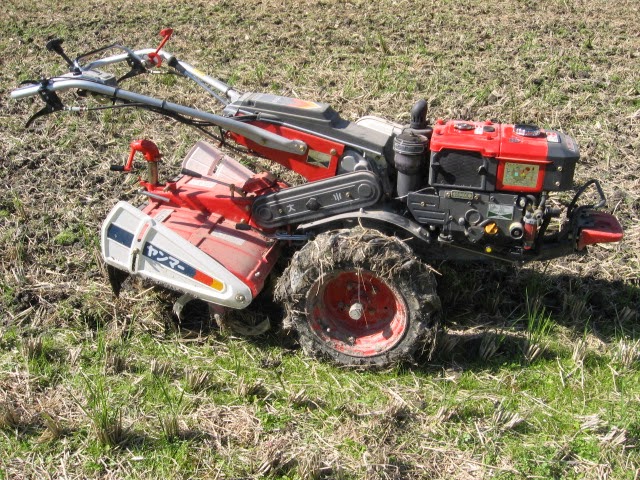
Even though we are mired in the dead of winter, you can never begin to plan too early for lawn care.  The piles of snow and ice have done a number on our lawns, and it may be time to seed new grass or prepare your vegetable or flower garden for when spring comes.  Before long, it will be time to take out the trusty tiller and get to work.  

In order to become more efficient, tillers have come a long way from their humble beginnings.  Simple push mowers have given way to the convenience and accessibility of gas-powered tillers.  Gas-powered tillers are reliable, dependable machines that will serve you faithfully for many years.  However, there does come a time where you add gasoline and oil, pull the starter cord, and… nothing.  The silence can be deafening.  Most failures to start a tiller result from a problem in the fuel or ignition system, so a few troubleshooting methods may help you identify and correct the problem.
Old gasoline is often the cause of a tiller that won’t start.  Gasoline that has been sitting in the tank since last year can often settle or condensation can seep in.  Drain the old fuel and replace it, while checking the carburetor and intake manifold bolts to ensure they are tight and ensure that all linkages are connected.  Everything pertaining to the fuel line needs to be nice and tight.  Be sure to replace the fuel according to manufacturer’s specifications.  Your tiller is likely fueled by regular high-octane fuel or is a two-cycle motor that requires the specified gas-oil mixture.  Ensure that if there is a fuel shutoff valve, that it is put in the open position. 

Also take a moment to check the ignition.  If your tiller has a shutoff switch, make sure the switch is in the “On” position when attempting to start it.  Disengage all attachments, make sure the transmission is in neutral, and all operating handles are in the correct starting positions.  Also check the spark plug by removing it and touching the bare metal of the spark plug’s base to the bare metal of the engine.  Look for the accompanying spark between the electrodes.  If there is none, it’s time to replace the spark plug.

Also, it’s important to check the fuel cap vent to ensure it’s open and that all filter screens in the tank are clear.  Take a moment to look at the air cleaner, as a dirty air cleaner can flood the engine or restrict air intake.  If none of these troubleshooting items fixes your tiller, give Crowell’sFlying Wrench a call.  Our mobile small engine repair team specializes in tiller repair, and we are eager to serve you with professional experience and competitive prices.  We serve Park City and the Salt Lake Valley.  Call us today.

By: Kyson Crowell

Tuesday, November 25, 2014

Which Snow Blower to Buy?

Winter has unofficially arrived.  As many parts of the country find themselves buried under feet of fresh powder, many of us find ourselves thinking how we are going to dig ourselves out when the storm hits.  Snow blowers have made life significantly easier for our snow-filled lives, but the important decision of choosing the best snow blower must be answered.  There are several brands of snow blower that offer great features and reliable performance, and each of them is angling for your hard-earned money.  
For those of you looking for the best snow blower of 2014, look no further than Troy-Bilt.  Troy-Bilt offers a wide array of reliable, durable snow blowers that can handle even the toughest of jobs.  Troy-Bilt offers a 2-year limited warranty and affordable financing options.  The Troy-Bilt 31AH64Q has been recognized by Consumer Reports as the best snow blower buy for your money this year, as it includes heated handgrips, joystick control, and offers the benefits of a double-stage gas blower for the price of a single-stage blower. 
Ariens also offers a variety of award-winning snow blowers that meet your needs and feature a selection of premium features.  The Arians 921022 is a critically-acclaimed double-stage snow blower that Consumer Reports recognizes as one of the year’s best.  What sets this snow blower apart is its heavy duty construction and immense power.  Ariens is renowned for durability and 3-year limited warranty.  Financing is also an option, allowing you to find a model that suits your needs and fits your budget. 
If you are looking for a more affordable option, the $700 Craftsman 88970 is an impressive double-stage machine.  This 26-inch gas blower is backed by the dependability of Craftsman, one of America’s most reputable brands.  This particular model offers great clearance and tremendous power output, helping make the task at hand a breeze.  Enjoy a two-year limited warranty and joystick control, with a limited lifetime warranty on upper and lower chute.
If looking for a single-stage snow blower, look no further than the Simplicity SS7522E.  Simplicity offers an affordable alternative to many of the more well-known brands, while featuring superior performance.  This particular model features a 163cc Briggs & Stratton 4-cycle motor, electric start, and highly-rated throwing power.  This $499 snow blower offers a two-year limited warranty and financing. 

Any of these award-winning snow blowers will make snow removal a breeze, while not putting a dent in your wallet.  However, as time goes on, many of these models will need to be serviced or repaired.  Crowell’s Flying Wrench offers local, mobile snow blower repair acrossthe Salt Lake County and Summit County to help your machine remain in tip-top condition.  We are here to serve you. 

By: Kyson Crowell

Tuesday, August 12, 2014

Tips and Tricks for Finding the Perfect Lawnmower for Your Lawn


When it comes time to trim the grass and perform some upkeep on the lawn, the key to making this a hassle-free chore is finding the perfect lawnmower. Just as with any other major project, attempting to tackle this job with the wrong tools means an unnecessary amount of time and energy being spent. For those that have recently begun the process of purchasing their first lawnmower or are simply looking to upgrade, here are some tips to keep in mind to get the most out of every penny invested.


Picking the Right Size
For the vast majority of property owners, a traditional push lawnmower will be sufficient for the weekly or monthly mowing sessions. This style is relatively easy to maneuver in smaller spaces and will stand up to quite a few years of use with the proper maintenance. For those that have larger years in the range of 1 or more acres, it may be best to focus on riding lawnmowers which are more expensive, but will also cut a much larger swath of grass at a quicker rate. The only thing to consider for those with a larger lawn is the amount of room there is to maneuver. If natural or man-made objects such as swimming pools or trees are in the way, a riding lawnmower could still be impractical.


A Closer Look at Blades

Modern lawnmowers have to primary blade setups, each with their own advantages and disadvantages. Much more common is the rotary mower in which a series of blades move in a circle while protected in a metal, plastic, or fiberglass housing. The blades will last quite some time, but there may also be less consistency with the length of the grass. The other style is the reel mower which is generally a little more expensive. Reel mowers have a fixed blade and spinning blades that sheer off grass when stuck between the two types of blades. This style is a good option for those that would like more control over the height of their grass or need to cut their lawn shorter.


Electric or Gas?
It often seems as if almost every landscaping specialist has their own opinion on which type of lawnmower is best when it comes to gasoline powered models or electric models. The advantages of electric models include much less noise while running, less maintenance, and lower running costs over time. The owner will not have to constantly change out spark plugs, oil filters, and many other components of gas mowers. Unfortunately, electric mowers are typically less powerful than gas mowers. Those with medium-sized lawns, uneven lawns, or lawns with thicker grass will want to focus on gas mowers. Those with a smaller and relatively well-maintained yard around their home may prefer electric mowers.


Mulching or Discharge Mowers?
The final decision that must be made is a mulching mower or a discharge lawnmower. A discharge lawnmower has a chute on either the back or along the side in which the clippings are propelled through and collected in a bag. A discharge mower, on the other hand, does not collect the clippings and instead discharges them directly back into the lawn. Discharge mowers are a great idea for those with thick or lush grass that might choke out the nutrients before they reach the soil. For sparse or dry grass, a mulching mower should be used to prevent dead grass from killing off the living grass underneath.

Once the buyer has a general idea of the size and style of lawnmower that they want, it is important to get a hands-on feel for different models. Small changes such as the height of the pushing bar or the ability to quickly release the collection bag can make quite a bit of difference over the years, but owners may not notice these nuances until they see the product firsthand.

Conclusion
If you are looking to better your lawn with a great lawn mower than make sure that you pick the right now. There is nothing worse than getting a lawn mower, using it and then figuring out it's not what you wanted. Do your homework because with a great lawn mower repair company in Salt Lake City you can keep it for a very long time.

By: Kyson Crowell

Monday, June 23, 2014

You Ever Wondered Who Is The Best?

So that old mower you have been using has finally kicked the bucket? It’s not the mower’s fault; after
all, it made it through countless summers of unrelenting punishment. From those days when you
forced it through slightly damp grass because you had a tee-time to get to, to the triple digit temps it
weathered during the dog days of summer, that machine has had quite the run. It is time to retire it with
the honor it deserves. So now it’s time to replace it, but your old machine has set the bar pretty high.
We’ve all heard that they don’t make things quite like they used to – how can you be sure to choose a
mower that will pick up where its predecessor left off? Is there a brand, or list of brands that stands out
above the rest?

There are as many small engine manufacturers as there are stars in the sky, but one brand – Briggs &
Stratton – is almost universally considered to be the best. Their product line includes engines for push
mowers, riding mowers, snow blowers, and even generators. Their engines are so prevalent that they
can be found on nearly all major brands of lawn mowers and yard equipment. We recommend at least
190 CCs to ensure you have enough power for adverse conditions, but much of the rest just boils down to comfort and preference.

Husqvarna got their start producing weapons for the Swedish Army, but have gone on to become
the world’s largest producer of outdoor power equipment, including lawn mowers and other yard
equipment. Their position at the top is no accident; a quick look online shows that they receive
overwhelmingly positive reviews. Many Husqvarna mowers come with the aforementioned Briggs &
Stratton Engines, but there are options available with Honda or Kohler engines as well.

Maybe you’re more of the ‘local first’ type and would prefer a domestic brand. If so, you really can’t go wrong with John Deere. Based out of Illinois, these iconic, green machines are about as American as it
gets. There is a reason you see a lot of old John Deere tractors in rural areas; these things are truly built
to last. And while they are mostly known for large agricultural machinery like harvesters, combines, and tractors, their riding and push mowers are built with the same attention commitment to quality.

While Briggs & Stratton have certainly made their mark on the small engine industry, and big companies like Husqvarna and Deere have developed a significant amount of brand loyalty among the general population, one should not interpret that to mean that they are the only options. There are plenty of other companies out there producing high quality machinery that is built to last including: Honda, Troy-Bilt and Toro. Unless you are using your machine for commercial applications, or in a particularly harsh environment, you should have no trouble finding a mower that fits your needs. The best thing to do is head out to your nearest small engine dealer and chat with them about the nature of your mowing and they should be able to point you in the right direction.

By: Kyson Crowell

Tuesday, June 10, 2014

Does Your Lawn Mower Stop Running After A Few Seconds?

Over the last few posts we have discussed a few possible solutions for a small engine that stops running after a few seconds. From using fuel stabilizer to prevent gas separation, to cleaning the carburetor. But there are two other common problems that could prevent your engine to lose power after starting; Bad spark plugs and the lesser known clogged gas cap.

Sparks plugs, as their name might suggest, provide the spark that ignites the gas in your engine.  When they go bad the engine won’t be able to run properly. Replacing spark plugs in your small engine is as easy as it is cheap. You simply remove the wire covering, and use a socket wrench to unscrew the spark old spark plug. Replace it with the new one and you should be good to go.

Another possible reason your engine won’t stay running is a bad gas cap. Gas caps have tiny vents in them to allow airflow to the gas tank. When they get clogged the engine can’t breathe, so to speak, and shuts down. To check if your gas cap is bad, try loosening it before starting the engine. If it runs better like this, the cap needs to go.


While there are many things that can cause your small engine to stop running after a few seconds, spark plugs and gas caps are cheap and easy to rule out. It is best to try the easy and inexpensive solutions before moving on to more complex repairs like disassembling your carburetor. Of course, if you are in Salt Lake City or surrounding areas, you can always give us a call and we can help you diagnose the problem

By: Kyson Crowell

Tuesday, May 6, 2014

Two Stroke Oil, What You Need To Know!

When it comes to two stroke oil for pre-mixed fuel, as with most things, you get what you pay for. If you are in a pinch, you can always go for the cheapest option, and it will work just fine. But if you want to get the most out of your engine, from performance to longevity, you really need to use a quality oil in your fuel mixture.
The most obvious problem with discount oil is the smell. Low quality oil, and those not designed for your engine, will create more smoke than their higher quality counterparts. This is because impurities in low quality oil prevent it from burning completely. Just like throwing a leafy branch on a fire, fuel that isn’t burned completely produces more smoke.  This is immediately noticeable to you and everyone else around you.
In addition to an increased presence of smoke, low quality two stroke oil causes increased carbon buildup on the valves in your engine. While some carbon buildup is unavoidable in a small engine, the thick smoke produced by inefficiently burned fuel speeds up the process considerably. Carbon particles accumulate on the valves, and the engine burns fuel less efficiently as a result. This cycle continues if left uninterrupted, and your engine’s performance will suffer.
Though low quality oil certainly has its downsides, that shouldn’t be taken to mean that you must only use professional-grade oil they use in competition. For most people out there, the middle shelf will offer the perfect balance of performance and economy. As they say, it is the middle path that leads to liberation.

By: Kyson Crowell

Sunday, March 30, 2014

Ethanol vrs Straight Gasoline

Ethanol has been used as a gas substitute for years. The alternative fuel produced from corn has been added to gasoline at pumps across the country, but in recent years many have begun to question its effects on small engines.

Gasoline containing up to 15% ethanol (E15) has been approved by the EPA for use in cars produced since 2001, but not in small engines like lawn mowers and leaf blowers. They found that the fuel caused small engines to run at higher temperatures than straight gasoline, which caused a number of problems including component failure.

While E15 is prohibited for use in small engines, its diluted counterpart E10 is not. Gasoline with 10% ethanol content can be found just about anywhere. The FDA has given it the go ahead with respect to use in small engines but many in the industry are not quite convinced. The Outdoor Power Equipment Institute, the trade organization for the industry, has indicated small engine repair shops everywhere are reporting the same problems caused by E15 in engines that only use E10. I have seen these issues first hand at my shop, Crowell’s Flying Wrench Mobile Small Engine Repairs.

Proponents of higher ethanol content refute these claims, pointing to a go-cart race park that runs its entire fleet on fuel containing a whopping 85% ethanol. An operation like that puts an incredible amount of stress on their engines; if a higher ethanol content can be linked to increased wear and tear, they should be able to reproduce these negative effects. Al Novstrup, owner of Thunder Road Family Fun Park, has been running his fleet of 135 go-carts on E85 gasoline for over 7 years and has yet to see any of the problems described in the FDA report.

Whichever side of the fence you land on, it is still best to heed the FDA guidelines and not use E15 gasoline in your small engine equipment. Particularly cautious individuals can buy specialty gas at home and garden stores and small engine dealers everywhere. You will certainly pay a higher price for this type of fuel but for many, the piece of mind is worth the extra money. If you prefer not to go this route, you can minimize the risk of damage by trying to run through the gas in your mower as quickly as possible during the summer months. This gives less time for the ethanol to draw water into the fuel system.

By: Kyson Crowell

Monday, March 17, 2014

How Do You Know If You Need To Change Your Oil?

Recently, we posted an article explaining how to change the oil in your small engine, but how do you know if you need do it? First, you should make sure your machine even requires oil changes in the first place. If you have a two-cycle engine, where you mix the oil with the gas manually, you don’t need to worry about it. If oil is added separately, however, you will want to change the oil periodically.

Recommendations can vary when it comes to the regularity of oil changes in small engines, even from the same manufacturer. Small Engine giants Briggs & Stratton recommend changing the oil after every 25 hours of operation at one place on their site, and every 50 hours at another. To be safe, you should check the owner’s manual for your specific machine for specific service intervals.

For most people this means one oil change a summer, but that is assuming the machine was operated under relatively mild conditions. If you have a habit of mowing through wet grass, or letting it grow to the point that your mower can barely make it through, you will need to do this more regularly. Other conditions that can cause you to go through oil more quickly are if you are consistently working in extreme heat, dusty conditions, or operating over rough and hilly terrain.

Any scenario that causes the engine to work harder or run at unusually high RPMs for extended periods of time will require more regular maintenance in all areas, not only engine oil. Changing the oil is an easy thing you can do to increase the life of your machine, so you aren't needing to call for a snow blower repair in the middle of a snow storm! If you aren’t particularly mechanically inclined, you can easily find a nearby small engine repair mechanic to take care of everything for you.

By: Kyson Crowell