Showing posts with label tune up. Show all posts

Wednesday, February 18, 2015

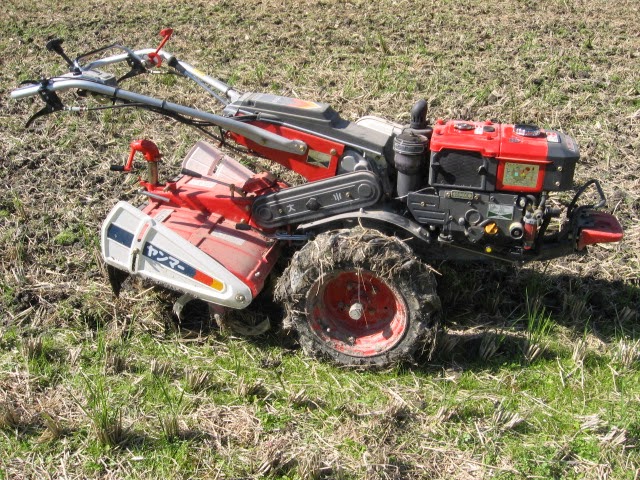
What Size Of Tiller Is Best For You?


Due to the unseasonably warm weather here in Utah, many of us have started to think about getting our gardens ready for spring.  Many of us have gardens both large and small, and yards that are waiting to be cultivated.  It’s important to pick the correct tiller for the job, but it’s also important to understand what size of tiller will be best for your particular project.
When thinking of what type of tiller you will need, think about the size of your garden.  A small garden is considered to be less than 1,500 square feet, a medium garden ranges from 1,500 square feet to 5,000 square feet, and a large garden is anything over 5,000 square feet.  Another consideration is based on the type of garden soil you are dealing with, as well as the size of the gardener! 
Typically, a small garden can be managed by a mini-tiller.  Mini-tillers range in price from $200 to $350.  A medium-sized garden is manageable with a 5 to 6-horsepower front-tined tiller, which range in price from $500 to $800.  Large gardens require at least a 6-horsepower rear-tined tiller, which can run from $800 to $2,000.
If the soil in your garden is very hard or rocky, a mini-tiller will often be underpowered to perform admirably, usually requiring a larger 4 to 6-horsepower tiller.  Keep in mind that if you are looking to till your entire yard, you won’t be able to get by with a mini-tiller either.  A large rear-tined tiller will typically work best when you are covering a large area, and the abundance of room to maneuver will be important. 
There are other cons  Front-tined machines are a little more difficult to manage, but that difficulty is offset by the lighter weight of the machine.  Rear-tined machines are a bit easier to use, due to their increased power, but they are more expensive and take up a great deal of space in your shed or garage. 
iderations when you look at what type of tiller would be more effective for you.
Crowell’s Flying Wrench offers tiller repair in Salt LakeCity, UT for any type of tiller.  Our mobile service will come to you anywhere in Salt Lake County or Park City, and our professional staff will quickly get your tiller running at full speed again.  Give us a call today to see what we can do for you!

By: Kyson Crowell

Thursday, January 22, 2015

What If Your Tiller Doesn't Start?

Even though we are mired in the dead of winter, you can never begin to plan too early for lawn care.  The piles of snow and ice have done a number on our lawns, and it may be time to seed new grass or prepare your vegetable or flower garden for when spring comes.  Before long, it will be time to take out the trusty tiller and get to work.  

In order to become more efficient, tillers have come a long way from their humble beginnings.  Simple push mowers have given way to the convenience and accessibility of gas-powered tillers.  Gas-powered tillers are reliable, dependable machines that will serve you faithfully for many years.  However, there does come a time where you add gasoline and oil, pull the starter cord, and… nothing.  The silence can be deafening.  Most failures to start a tiller result from a problem in the fuel or ignition system, so a few troubleshooting methods may help you identify and correct the problem.
Old gasoline is often the cause of a tiller that won’t start.  Gasoline that has been sitting in the tank since last year can often settle or condensation can seep in.  Drain the old fuel and replace it, while checking the carburetor and intake manifold bolts to ensure they are tight and ensure that all linkages are connected.  Everything pertaining to the fuel line needs to be nice and tight.  Be sure to replace the fuel according to manufacturer’s specifications.  Your tiller is likely fueled by regular high-octane fuel or is a two-cycle motor that requires the specified gas-oil mixture.  Ensure that if there is a fuel shutoff valve, that it is put in the open position. 

Also take a moment to check the ignition.  If your tiller has a shutoff switch, make sure the switch is in the “On” position when attempting to start it.  Disengage all attachments, make sure the transmission is in neutral, and all operating handles are in the correct starting positions.  Also check the spark plug by removing it and touching the bare metal of the spark plug’s base to the bare metal of the engine.  Look for the accompanying spark between the electrodes.  If there is none, it’s time to replace the spark plug.

Also, it’s important to check the fuel cap vent to ensure it’s open and that all filter screens in the tank are clear.  Take a moment to look at the air cleaner, as a dirty air cleaner can flood the engine or restrict air intake.  If none of these troubleshooting items fixes your tiller, give Crowell’sFlying Wrench a call.  Our mobile small engine repair team specializes in tiller repair, and we are eager to serve you with professional experience and competitive prices.  We serve Park City and the Salt Lake Valley.  Call us today.

By: Kyson Crowell

Thursday, October 23, 2014

What Snow Blower Best Fits You?

       Utah winters can be brutal.  Experiencing lake-effect snow can quickly turn 2 inches of freshly coated snow into 2 feet of packed powder that leaves our driveways buried in.  Digging our way out of that snow without a snow blower can be daunting, to say the least.  Most of us can recall stories from our childhood of being woken up by Dad hours before dawn to head outside with the shovel and get to work.  It’s a wonder many of us don’t walk around with debilitating back injuries from all that heavy lifting. 
       
       Even to this day, many people haven’t made the move to buy a snow blower.  If you’re a newbie, it’s hard to know which snow blower is best.  There are two primary types of snow blowers: single-stage and double-stage.  Single-stage models also offer gas and electric options, further confusing the uninitiated.  Knowing which type to buy may seem daunting, but in reality, the decision is easy once you understand what you are looking for. 

       A single-stage gas snow blower is ideal for a flat, midsized paved driveway.  They are most effective in areas that receive an average snowfall of 8 inches or less of snow or less.  Single-stage blowers are light, easy to handle, and require the same amount of garage storage as a typical lawnmower.   A single-stage gas model will give you a 20- to 22-inch swath when clearing your driveway. Gas-powered models are two-cycle engines and require regular maintenance and most offer electric starters.  Single-stage snow blowers are not a good choice for gravel driveways as the auger contacts the ground, and the limited drive action makes steep hills undoable, as the machine will pull from side to side.  
       
       Single-stage electric models are ideal if you have a short, flat paved driveway and walk while electric snow blowers are most effective in areas that receive an average snowfall of 4 inches while an electric model will give you an 11- to 18-inch swath.  Single-stage electric snow blowers offer many of the same advantages and disadvantages, while being quieter and not requiring regular maintenance.  Just be aware that you’ll require a long extension cord you will have to tote with you.
Double-stage snow blowers are the best option for you if you have a long, wide, or hilly driveway and receive a typical snowfall of 8 inches or more.  Two-stage blowers clear a 24-32 inch swath, ensuring your job is done much more quickly and efficiently.  Double-stage blowers are required for gravel driveways, as the awning won’t contact the ground.  They offer electric starting and have driven wheels and an impeller to throw snow.  Two-stages are quite heavy and take up as much space as some sit-down mowers, while requiring regular maintenance. 
When choosing any model, be sure to try the controls to ensure that you are comfortable with the way it handles, the height of the controls, and the ease of chute adjustment.  One-handed drive and auger are important on a double-stage model.  Keep your eyes open for models with headlights and dead-man control.
       
       When the time comes to repair your new investment, Crowell’s Flying Wrench offers local, mobile snow blower repair throughout the Salt Lake Valley and we are a top pick for snow blower tune up's and repair in Park City.  We offer outstanding customer service and competitive pricing that will fit any budget.  Our trustworthy team brings years of repair experience to meet any need.

By: Kyson Crowell