Showing posts with label lawn. Show all posts

Thursday, May 21, 2015

Help Me Take Care Of My Lawn!


Spring has sprung!  Of course, living in Utah, we can never be 100% sure that one last snowstorm will sneak up on us, but for all intents and purposes, we are on the eve of a summer of outdoor fun and adventure.  One of the first steps to segue into spring and summer is by taking care of your lawn, which may or may not have been as battered as normal due to our mild winter.

When caring for your lawn, it's important take the appropriate steps to make sure that it is healthy, green, and beautiful.  Follow the basic steps below to ensure that your lawn is ready for summer barbecues, flag football games, and more.

1.     Follow the One-Third Rule – NEVER cut your grass more than one-third of its current height.  Taking more than that one-third is traumatizing on the grass plant and will lead to unhealthy, dying grass that is hard to treat.  If your lawn needs to be cut by more than this one-third rule of thumb, you can do it in stages over a few days.
2.     Cut Your Grass to the Highest Acceptable Height – By cutting your grass a little longer, you are ensuring that it retains water more than if it were short.  More retained water means greener grass.  While a short lawn may hold some visual appeal, your lawn will brown and the soil will quickly dry and lose crucial nutrients.
3.     Sharpen Your Mower Blades – Unsharpened mower blades take a toll on your grass, as that hack at the grass rather than cut it cleanly.  Grass that has been hacked at is damaged and more prone to not growing healthily.  Blades can be easily sharpened, and should be sharpened at least twice a season.
4.     Fertilize – Fertilizing your lawn ensures that your grass is given the appropriate nutrients to stay healthy and green.  Fertilizer is readily available at any home and garden center, and is easily applied to your lawn.  It's best practice to treat your lawn with fertilizer every 4-6 weeks to keep it looking beautiful and green.
5.     Treat Weeds and Disease – If you have some unsightly brown spots or dandelions, you may have a problem with your lawn.  Insects, disease, and weeds can undermine a dedicated lawn care effort.  There is treatment through various products such as weed and feed, but the best course of action is to consult a lawn care professional for further advice and treatment.
6.     Watering Your Lawn – Deep watering is  When watering, it's more effective to water every few days than for a little bit every day.  Having said that, you will want to give your lawn at least 1 ½ inches of water a week.  Make sure to water it in the mornings to make sure the water doesn't quickly get burned off by the scintillating summer sun.
best.

Crowell's Flying Wrench is a full-service mobile repair company that comes to you and services your equipment at your convenience.  Our lawn mower repair service in Draper, Utah provides years of experience and friendly service that will leave a lasting impression upon you.  In addition to Draper, we service all of the Salt Lake Valley.  Give us a call today to see how we can help you!

By: Kyson Crowell

Thursday, January 22, 2015

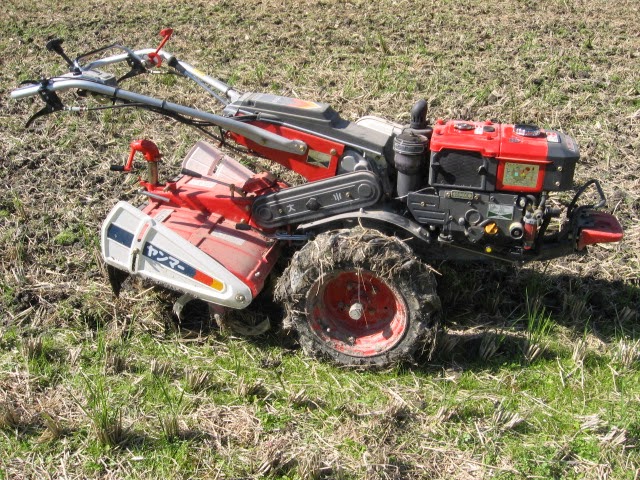
What If Your Tiller Doesn't Start?

Even though we are mired in the dead of winter, you can never begin to plan too early for lawn care.  The piles of snow and ice have done a number on our lawns, and it may be time to seed new grass or prepare your vegetable or flower garden for when spring comes.  Before long, it will be time to take out the trusty tiller and get to work.  

In order to become more efficient, tillers have come a long way from their humble beginnings.  Simple push mowers have given way to the convenience and accessibility of gas-powered tillers.  Gas-powered tillers are reliable, dependable machines that will serve you faithfully for many years.  However, there does come a time where you add gasoline and oil, pull the starter cord, and… nothing.  The silence can be deafening.  Most failures to start a tiller result from a problem in the fuel or ignition system, so a few troubleshooting methods may help you identify and correct the problem.
Old gasoline is often the cause of a tiller that won’t start.  Gasoline that has been sitting in the tank since last year can often settle or condensation can seep in.  Drain the old fuel and replace it, while checking the carburetor and intake manifold bolts to ensure they are tight and ensure that all linkages are connected.  Everything pertaining to the fuel line needs to be nice and tight.  Be sure to replace the fuel according to manufacturer’s specifications.  Your tiller is likely fueled by regular high-octane fuel or is a two-cycle motor that requires the specified gas-oil mixture.  Ensure that if there is a fuel shutoff valve, that it is put in the open position. 

Also take a moment to check the ignition.  If your tiller has a shutoff switch, make sure the switch is in the “On” position when attempting to start it.  Disengage all attachments, make sure the transmission is in neutral, and all operating handles are in the correct starting positions.  Also check the spark plug by removing it and touching the bare metal of the spark plug’s base to the bare metal of the engine.  Look for the accompanying spark between the electrodes.  If there is none, it’s time to replace the spark plug.

Also, it’s important to check the fuel cap vent to ensure it’s open and that all filter screens in the tank are clear.  Take a moment to look at the air cleaner, as a dirty air cleaner can flood the engine or restrict air intake.  If none of these troubleshooting items fixes your tiller, give Crowell’sFlying Wrench a call.  Our mobile small engine repair team specializes in tiller repair, and we are eager to serve you with professional experience and competitive prices.  We serve Park City and the Salt Lake Valley.  Call us today.

By: Kyson Crowell

Tuesday, August 12, 2014

Tips and Tricks for Finding the Perfect Lawnmower for Your Lawn


When it comes time to trim the grass and perform some upkeep on the lawn, the key to making this a hassle-free chore is finding the perfect lawnmower. Just as with any other major project, attempting to tackle this job with the wrong tools means an unnecessary amount of time and energy being spent. For those that have recently begun the process of purchasing their first lawnmower or are simply looking to upgrade, here are some tips to keep in mind to get the most out of every penny invested.


Picking the Right Size
For the vast majority of property owners, a traditional push lawnmower will be sufficient for the weekly or monthly mowing sessions. This style is relatively easy to maneuver in smaller spaces and will stand up to quite a few years of use with the proper maintenance. For those that have larger years in the range of 1 or more acres, it may be best to focus on riding lawnmowers which are more expensive, but will also cut a much larger swath of grass at a quicker rate. The only thing to consider for those with a larger lawn is the amount of room there is to maneuver. If natural or man-made objects such as swimming pools or trees are in the way, a riding lawnmower could still be impractical.


A Closer Look at Blades

Modern lawnmowers have to primary blade setups, each with their own advantages and disadvantages. Much more common is the rotary mower in which a series of blades move in a circle while protected in a metal, plastic, or fiberglass housing. The blades will last quite some time, but there may also be less consistency with the length of the grass. The other style is the reel mower which is generally a little more expensive. Reel mowers have a fixed blade and spinning blades that sheer off grass when stuck between the two types of blades. This style is a good option for those that would like more control over the height of their grass or need to cut their lawn shorter.


Electric or Gas?
It often seems as if almost every landscaping specialist has their own opinion on which type of lawnmower is best when it comes to gasoline powered models or electric models. The advantages of electric models include much less noise while running, less maintenance, and lower running costs over time. The owner will not have to constantly change out spark plugs, oil filters, and many other components of gas mowers. Unfortunately, electric mowers are typically less powerful than gas mowers. Those with medium-sized lawns, uneven lawns, or lawns with thicker grass will want to focus on gas mowers. Those with a smaller and relatively well-maintained yard around their home may prefer electric mowers.


Mulching or Discharge Mowers?
The final decision that must be made is a mulching mower or a discharge lawnmower. A discharge lawnmower has a chute on either the back or along the side in which the clippings are propelled through and collected in a bag. A discharge mower, on the other hand, does not collect the clippings and instead discharges them directly back into the lawn. Discharge mowers are a great idea for those with thick or lush grass that might choke out the nutrients before they reach the soil. For sparse or dry grass, a mulching mower should be used to prevent dead grass from killing off the living grass underneath.

Once the buyer has a general idea of the size and style of lawnmower that they want, it is important to get a hands-on feel for different models. Small changes such as the height of the pushing bar or the ability to quickly release the collection bag can make quite a bit of difference over the years, but owners may not notice these nuances until they see the product firsthand.

Conclusion
If you are looking to better your lawn with a great lawn mower than make sure that you pick the right now. There is nothing worse than getting a lawn mower, using it and then figuring out it's not what you wanted. Do your homework because with a great lawn mower repair company in Salt Lake City you can keep it for a very long time.

By: Kyson Crowell