Showing posts with label Tillers. Show all posts

Wednesday, February 18, 2015

What Size Of Tiller Is Best For You?


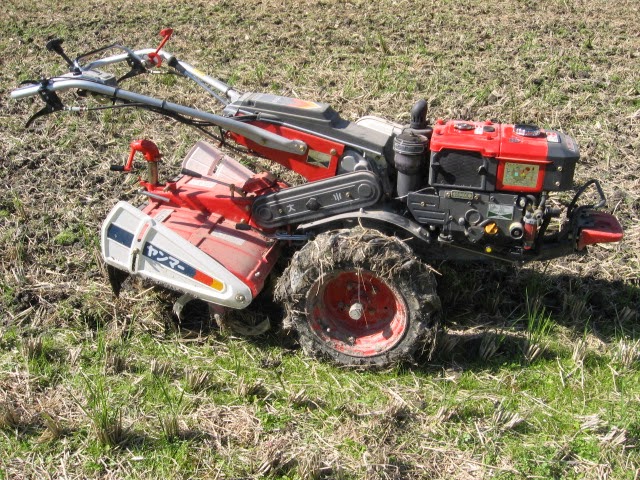
Due to the unseasonably warm weather here in Utah, many of us have started to think about getting our gardens ready for spring.  Many of us have gardens both large and small, and yards that are waiting to be cultivated.  It’s important to pick the correct tiller for the job, but it’s also important to understand what size of tiller will be best for your particular project.
When thinking of what type of tiller you will need, think about the size of your garden.  A small garden is considered to be less than 1,500 square feet, a medium garden ranges from 1,500 square feet to 5,000 square feet, and a large garden is anything over 5,000 square feet.  Another consideration is based on the type of garden soil you are dealing with, as well as the size of the gardener! 
Typically, a small garden can be managed by a mini-tiller.  Mini-tillers range in price from $200 to $350.  A medium-sized garden is manageable with a 5 to 6-horsepower front-tined tiller, which range in price from $500 to $800.  Large gardens require at least a 6-horsepower rear-tined tiller, which can run from $800 to $2,000.
If the soil in your garden is very hard or rocky, a mini-tiller will often be underpowered to perform admirably, usually requiring a larger 4 to 6-horsepower tiller.  Keep in mind that if you are looking to till your entire yard, you won’t be able to get by with a mini-tiller either.  A large rear-tined tiller will typically work best when you are covering a large area, and the abundance of room to maneuver will be important. 
There are other cons  Front-tined machines are a little more difficult to manage, but that difficulty is offset by the lighter weight of the machine.  Rear-tined machines are a bit easier to use, due to their increased power, but they are more expensive and take up a great deal of space in your shed or garage. 
iderations when you look at what type of tiller would be more effective for you.
Crowell’s Flying Wrench offers tiller repair in Salt LakeCity, UT for any type of tiller.  Our mobile service will come to you anywhere in Salt Lake County or Park City, and our professional staff will quickly get your tiller running at full speed again.  Give us a call today to see what we can do for you!

By: Kyson Crowell

Thursday, January 22, 2015

What If Your Tiller Doesn't Start?

Even though we are mired in the dead of winter, you can never begin to plan too early for lawn care.  The piles of snow and ice have done a number on our lawns, and it may be time to seed new grass or prepare your vegetable or flower garden for when spring comes.  Before long, it will be time to take out the trusty tiller and get to work.  

In order to become more efficient, tillers have come a long way from their humble beginnings.  Simple push mowers have given way to the convenience and accessibility of gas-powered tillers.  Gas-powered tillers are reliable, dependable machines that will serve you faithfully for many years.  However, there does come a time where you add gasoline and oil, pull the starter cord, and… nothing.  The silence can be deafening.  Most failures to start a tiller result from a problem in the fuel or ignition system, so a few troubleshooting methods may help you identify and correct the problem.
Old gasoline is often the cause of a tiller that won’t start.  Gasoline that has been sitting in the tank since last year can often settle or condensation can seep in.  Drain the old fuel and replace it, while checking the carburetor and intake manifold bolts to ensure they are tight and ensure that all linkages are connected.  Everything pertaining to the fuel line needs to be nice and tight.  Be sure to replace the fuel according to manufacturer’s specifications.  Your tiller is likely fueled by regular high-octane fuel or is a two-cycle motor that requires the specified gas-oil mixture.  Ensure that if there is a fuel shutoff valve, that it is put in the open position. 

Also take a moment to check the ignition.  If your tiller has a shutoff switch, make sure the switch is in the “On” position when attempting to start it.  Disengage all attachments, make sure the transmission is in neutral, and all operating handles are in the correct starting positions.  Also check the spark plug by removing it and touching the bare metal of the spark plug’s base to the bare metal of the engine.  Look for the accompanying spark between the electrodes.  If there is none, it’s time to replace the spark plug.

Also, it’s important to check the fuel cap vent to ensure it’s open and that all filter screens in the tank are clear.  Take a moment to look at the air cleaner, as a dirty air cleaner can flood the engine or restrict air intake.  If none of these troubleshooting items fixes your tiller, give Crowell’sFlying Wrench a call.  Our mobile small engine repair team specializes in tiller repair, and we are eager to serve you with professional experience and competitive prices.  We serve Park City and the Salt Lake Valley.  Call us today.

By: Kyson Crowell

Wednesday, August 20, 2014

Lets Talk About Trimmers

Most of the posts so far have focused on lawnmowers, but it could be argued that the weed trimmer is just as important when it comes to your lawn-care arsenal. Sure, the mower does most of the work; but every homeowner knows that the devil is in the details when it comes to the silent competition between neighbors for best lawn. You’re done for if you don’t clean up the edges, and a trimmer is the best way to do it. But how do you know what kind of weed trimmer to get? Use this guide to determine which type is best for your application and if you have a trimmer and are struggling to get it to work and are watching those edges keep growing check out are great tiller service in Salt lake City UT

Curved-Shaft Trimmers

Curved-shaft trimmers are among the most popular because they are generally lightweight and easy to use. They get their name because of the bend in the shaft toward the cutting head. This bend brings the cutting head closer to the operator, which makes it a little easier to handle for detail work and getting at those tricky spots. Because of the bend in the shaft, these trimmers are driven by a flexible cable that runs from the motor to the cutting head. The flexible nature of this cable limits the amount of power that can be applied from the engine, as too powerful of a motor would cause it to break. That said, these machines are more than capable of handling the vast majority of jobs in a suburban setting.

Traight-Shaft Trimmers

Straight-shaft trimmers are most commonly used for industrial uses, or by those with particularly large jobs. Rather than the flexible drive cable used in curved-shaft trimmers, these have a rigid drive shaft. This results in increased durability and power transfer from the motor. This means that more powerful motors can be used. While the straight shaft allows for more power, it also means that the cutting head is further from the operator. This can make getting a level cut slightly more difficult for the inexperienced. These also tend to be heavier than their curved-shaft counterparts.

Rolling Trimmers

Rolling trimmers are a slightly newer development in the lawn-care industry. These machines look like a mix between a standard push mower and a string trimmer. Their rolling platform allows for larger and much more powerful engines along with a wider cutting radius. Unfortunately, their minimum cutting heights are relatively high when compared to most lawn mowers, making them essentially useless for all but the most niche projects.

At the end of the day, the type of trimmer you get depends entirely upon how you intend to use it. Curved-shaft trimmers are perfect for most residential uses because of their light weight and maneuverability. Straight-shaft trimmers are great for larger projects and industrial uses because of the increase in power and length of the drive shaft. Rolling trimmers are useful for some specific applications, but most people have no need for them. Consider these tips before you buy and you’re sure to end up with a machine that is perfect for you.

By: Kyson Crowell


Tuesday, June 10, 2014

Does Your Lawn Mower Stop Running After A Few Seconds?

Over the last few posts we have discussed a few possible solutions for a small engine that stops running after a few seconds. From using fuel stabilizer to prevent gas separation, to cleaning the carburetor. But there are two other common problems that could prevent your engine to lose power after starting; Bad spark plugs and the lesser known clogged gas cap.

Sparks plugs, as their name might suggest, provide the spark that ignites the gas in your engine.  When they go bad the engine won’t be able to run properly. Replacing spark plugs in your small engine is as easy as it is cheap. You simply remove the wire covering, and use a socket wrench to unscrew the spark old spark plug. Replace it with the new one and you should be good to go.

Another possible reason your engine won’t stay running is a bad gas cap. Gas caps have tiny vents in them to allow airflow to the gas tank. When they get clogged the engine can’t breathe, so to speak, and shuts down. To check if your gas cap is bad, try loosening it before starting the engine. If it runs better like this, the cap needs to go.


While there are many things that can cause your small engine to stop running after a few seconds, spark plugs and gas caps are cheap and easy to rule out. It is best to try the easy and inexpensive solutions before moving on to more complex repairs like disassembling your carburetor. Of course, if you are in Salt Lake City or surrounding areas, you can always give us a call and we can help you diagnose the problem

By: Kyson Crowell

Sunday, March 30, 2014

Ethanol vrs Straight Gasoline

Ethanol has been used as a gas substitute for years. The alternative fuel produced from corn has been added to gasoline at pumps across the country, but in recent years many have begun to question its effects on small engines.

Gasoline containing up to 15% ethanol (E15) has been approved by the EPA for use in cars produced since 2001, but not in small engines like lawn mowers and leaf blowers. They found that the fuel caused small engines to run at higher temperatures than straight gasoline, which caused a number of problems including component failure.

While E15 is prohibited for use in small engines, its diluted counterpart E10 is not. Gasoline with 10% ethanol content can be found just about anywhere. The FDA has given it the go ahead with respect to use in small engines but many in the industry are not quite convinced. The Outdoor Power Equipment Institute, the trade organization for the industry, has indicated small engine repair shops everywhere are reporting the same problems caused by E15 in engines that only use E10. I have seen these issues first hand at my shop, Crowell’s Flying Wrench Mobile Small Engine Repairs.

Proponents of higher ethanol content refute these claims, pointing to a go-cart race park that runs its entire fleet on fuel containing a whopping 85% ethanol. An operation like that puts an incredible amount of stress on their engines; if a higher ethanol content can be linked to increased wear and tear, they should be able to reproduce these negative effects. Al Novstrup, owner of Thunder Road Family Fun Park, has been running his fleet of 135 go-carts on E85 gasoline for over 7 years and has yet to see any of the problems described in the FDA report.

Whichever side of the fence you land on, it is still best to heed the FDA guidelines and not use E15 gasoline in your small engine equipment. Particularly cautious individuals can buy specialty gas at home and garden stores and small engine dealers everywhere. You will certainly pay a higher price for this type of fuel but for many, the piece of mind is worth the extra money. If you prefer not to go this route, you can minimize the risk of damage by trying to run through the gas in your mower as quickly as possible during the summer months. This gives less time for the ethanol to draw water into the fuel system.

By: Kyson Crowell

Monday, March 17, 2014

How Do You Know If You Need To Change Your Oil?

Recently, we posted an article explaining how to change the oil in your small engine, but how do you know if you need do it? First, you should make sure your machine even requires oil changes in the first place. If you have a two-cycle engine, where you mix the oil with the gas manually, you don’t need to worry about it. If oil is added separately, however, you will want to change the oil periodically.

Recommendations can vary when it comes to the regularity of oil changes in small engines, even from the same manufacturer. Small Engine giants Briggs & Stratton recommend changing the oil after every 25 hours of operation at one place on their site, and every 50 hours at another. To be safe, you should check the owner’s manual for your specific machine for specific service intervals.

For most people this means one oil change a summer, but that is assuming the machine was operated under relatively mild conditions. If you have a habit of mowing through wet grass, or letting it grow to the point that your mower can barely make it through, you will need to do this more regularly. Other conditions that can cause you to go through oil more quickly are if you are consistently working in extreme heat, dusty conditions, or operating over rough and hilly terrain.

Any scenario that causes the engine to work harder or run at unusually high RPMs for extended periods of time will require more regular maintenance in all areas, not only engine oil. Changing the oil is an easy thing you can do to increase the life of your machine, so you aren't needing to call for a snow blower repair in the middle of a snow storm! If you aren’t particularly mechanically inclined, you can easily find a nearby small engine repair mechanic to take care of everything for you.

By: Kyson Crowell